Nov 2025— March 2026
La Galería Rebelde, Guatemala City.
PARABOLA
A narrative of a feigned event from which, through comparison or resemblance, a relevant truth or moral teaching is derived.
An open curve whose points are equidistant from a fixed line and a fixed point, formed by two branches symmetrical along an axis.
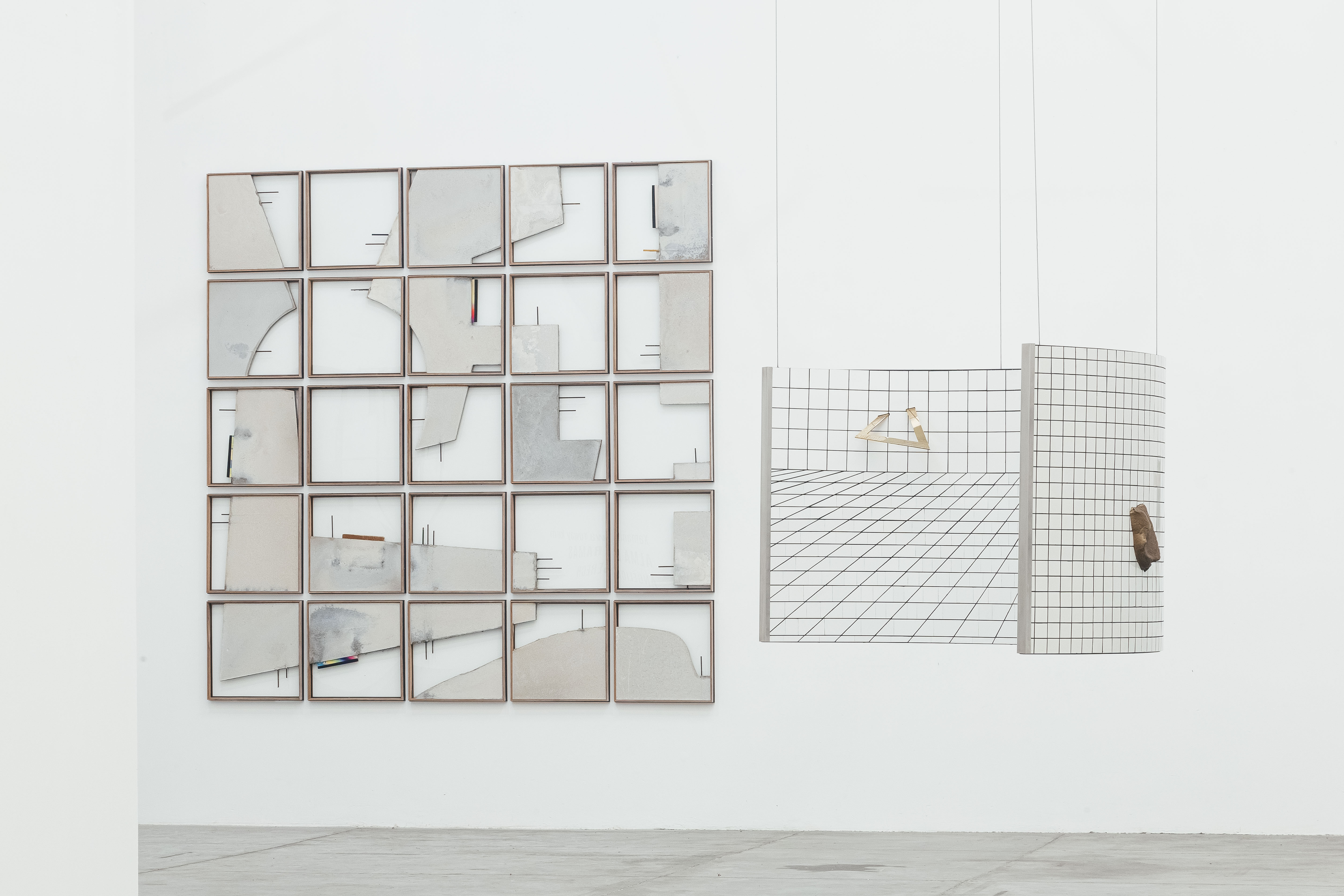
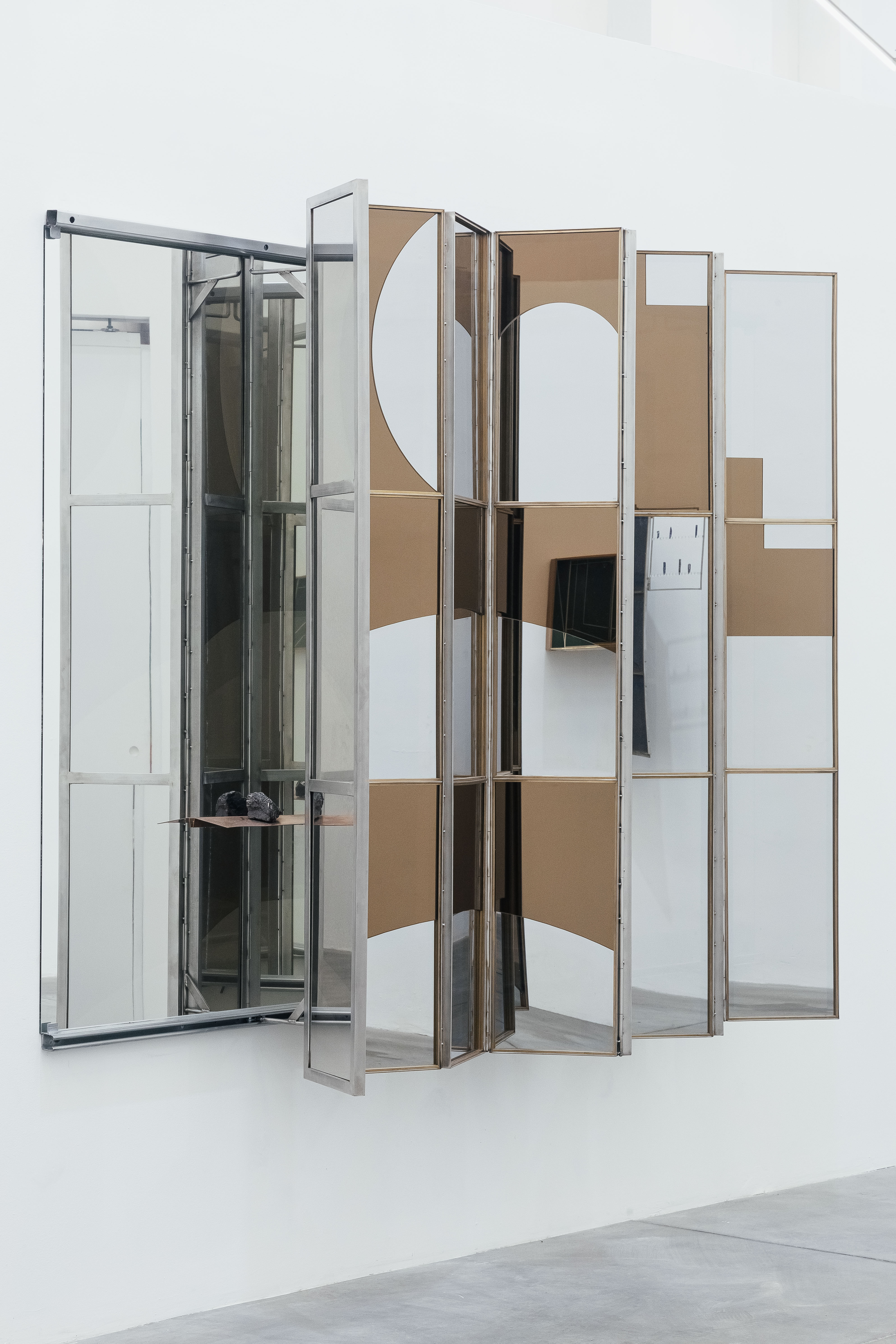
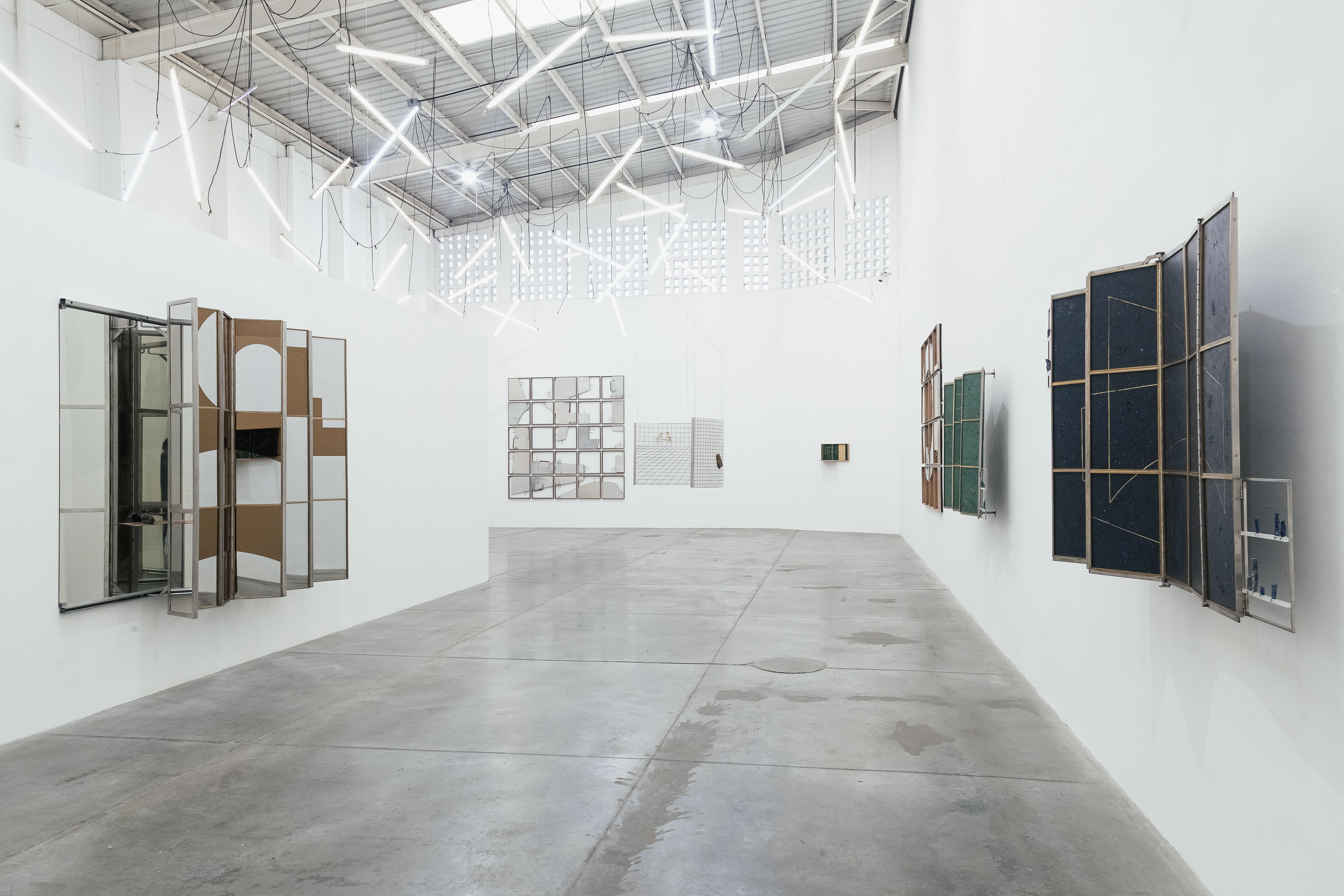
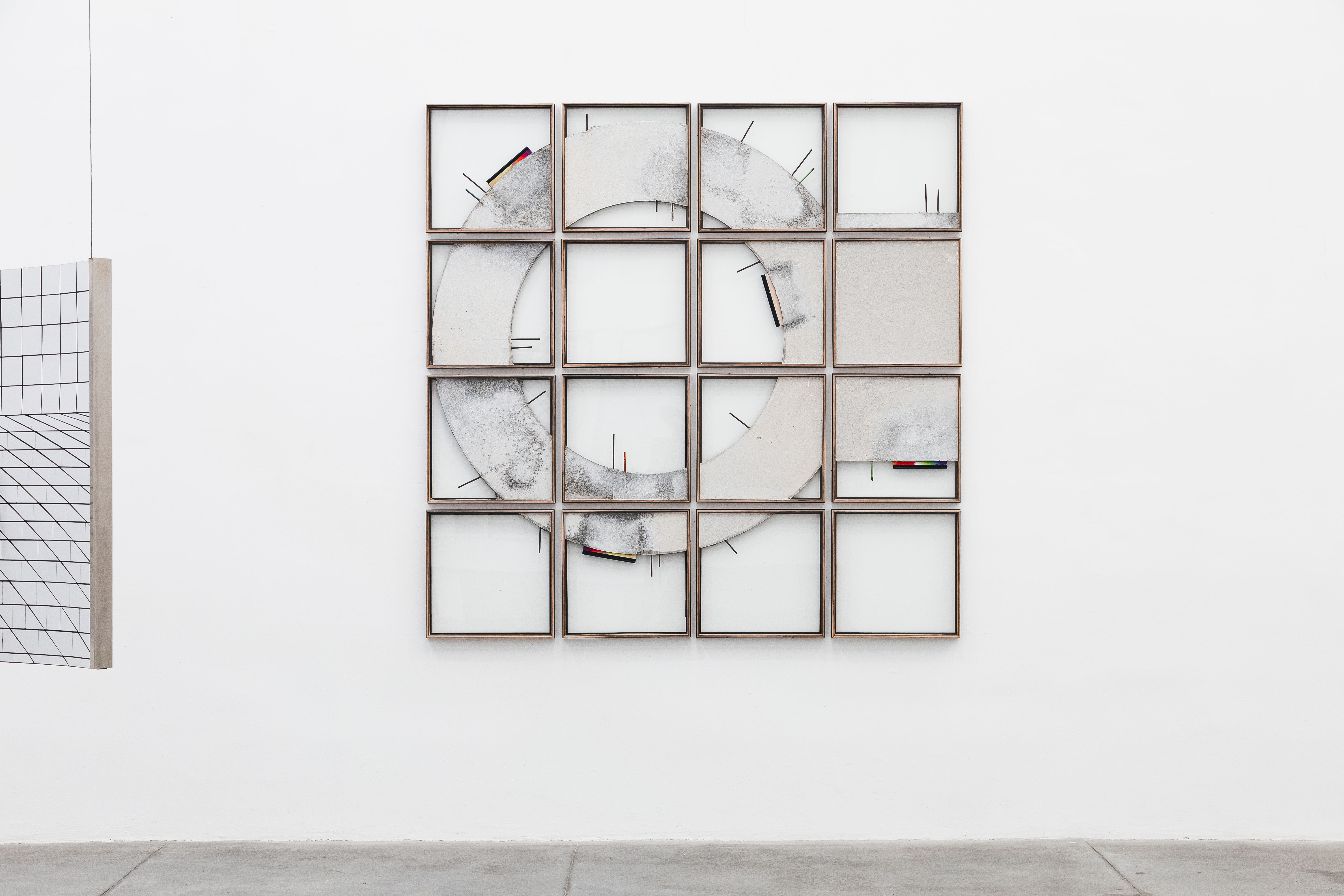
Through nods to Latin American modernist architecture and echoes of pre-Columbian traditions, Ishmael Randall-Weeks develops a proposal that intertwines construction, education, and transformation. He explores the concept of functionality from a utopian and critical perspective, pushing sculpture into a territory of infinite evolution, where form is constantly reinvented.
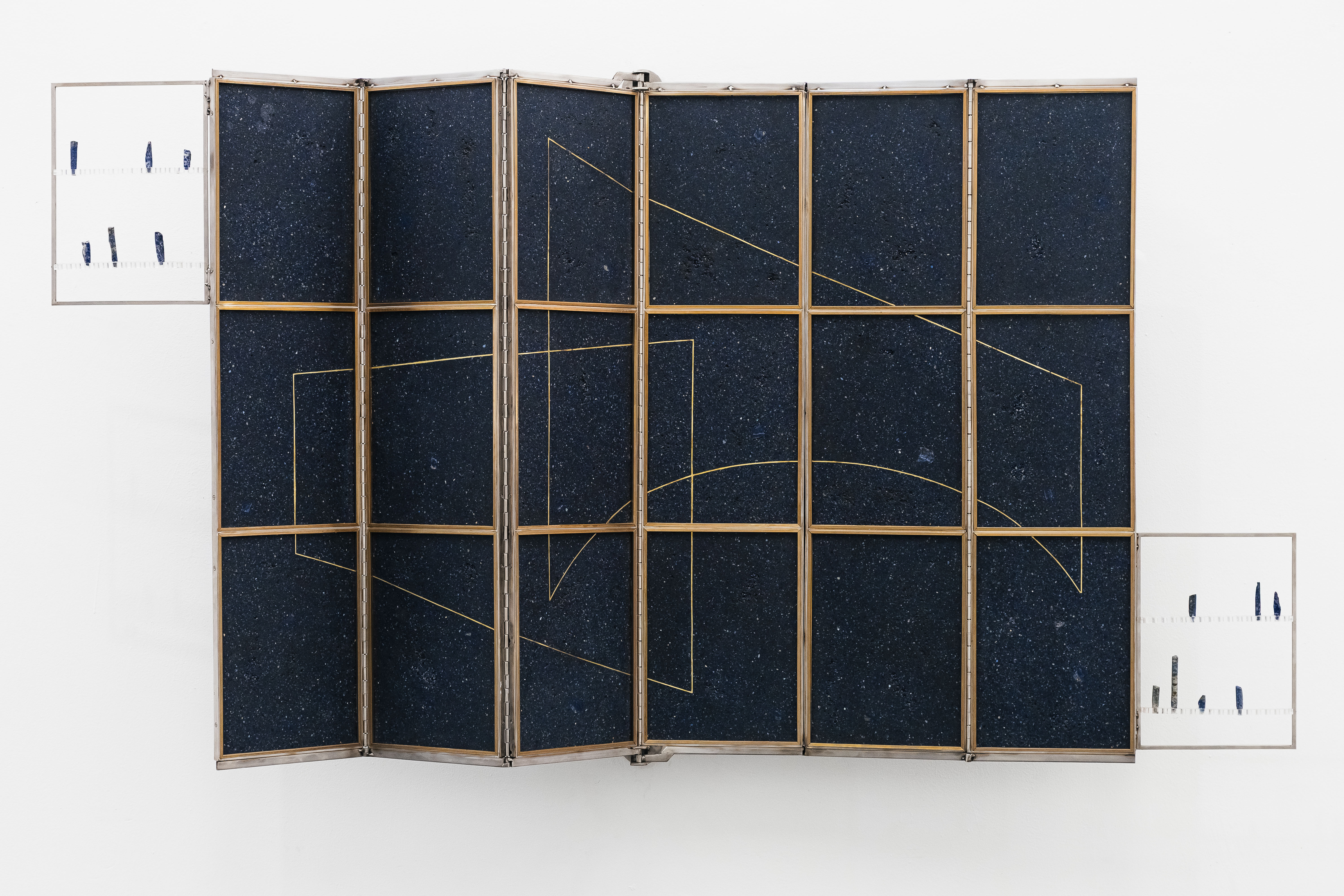
The certainty of materiality occupies a central place in his work. Like an abstract codex—a cartography that is both sensory and material—it reveals a sustained interest in the exploration and categorization of our everyday urban presence through the material remnants that surround us. The use of construction objects, together with clays, colored earths, and minerals, gives rise to a series of works in which history, energy, and collective memory converge.
His work thus undergoes a continuous process of change, not only in formal terms, but also in the very nature of the materials that compose it. The act of grinding lapis lazuli into powder, as well as reducing everyday materials into small chalk-like objects inscribed with the date of their creation, invites us to participate in a tension between permanence and habitability. Metaphor enters into dialogue with what already exists, with what has been built, and with its potential for becoming.
Taken together, the works share the sense of functioning as an abstract codex: a utopian cartography, yet one charged with reality and with time documented through materiality. Alongside languages and measuring tools, educational instruments, and mineral panels, the works present themselves as energetic transmitters that reveal the possibility of reinventing our own ways of inhabiting and understanding the world.
Description of the works
In its dual meaning—as both moral narrative and geometric figure—the parabola embodies a search. In this exhibition, the parabola is not limited to a symbolic story or a mathematical curve; it becomes a philosophical and material metaphor for the ways in which we construct meaning, city, and subjectivity. The body of work unfolds as a reflection on learning, transformation, and collective memory—a gesture of faith in the acts of building, understanding, and remembering.
—Ishmael Randall-Weeks, Artist